About The Song
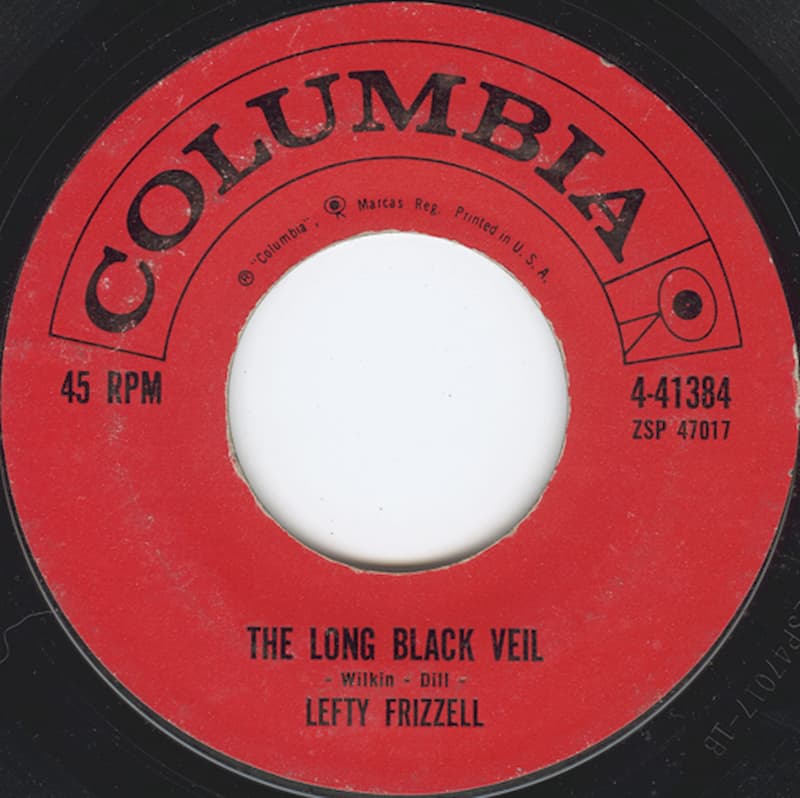
In early March 1959 Lefty Frizzell walked into Bradley Film and Recording Studio in downtown Nashville for a session that would quietly revive his career. On March 3 he recorded “The Long Black Veil,” a new ballad written only hours earlier by songwriters Danny Dill and Marijohn Wilkin. Produced by Don Law and featuring Wilkin herself on piano along with top Nashville sidemen such as Grady Martin and Harold Bradley on guitars and Don Helms on steel, the three-minute-and-five-second track was released on April 20 as a Columbia single with “When It Rains the Blues” on the B-side. It marked Frizzell’s return to the national spotlight after nearly five years without a major hit.
Dill and Wilkin had set out to create what Dill later called an “instant folk song,” something that sounded centuries old even though it had just been composed. They finished the lyrics and melody in a single afternoon and rushed the demo to Frizzell, who learned it on the spot. The writers drew on three separate sources that had lingered in Dill’s mind for years: a newspaper account of an unsolved priest’s murder in New Jersey under a town-hall light with dozens of witnesses, the legend of a mysterious woman who visited Rudolph Valentino’s grave each year wearing a long black veil, and the melody and mood of Red Foley’s gospel recording “God Walks These Hills with Me.”
The song unfolds as a first-person confession from beyond the grave. The narrator is wrongly accused of murder and sentenced to hang. He refuses to provide the one alibi that would save him because on the night of the crime he was in the arms of his best friend’s wife. Rather than expose the affair and destroy two marriages, he chooses silence and death. Each verse ends with the image of a veiled woman standing by his grave on cold, windy nights, her identity and sorrow known only to the listener.
Frizzell delivered the story with the same understated vocal slides and conversational phrasing that had made him famous in the early 1950s. The sparse arrangement and his restrained performance let the grim narrative speak for itself, giving the record an eerie, almost timeless quality that set it apart from the brighter honky-tonk sound he had pioneered earlier in the decade.
Released in the spring of 1959, “The Long Black Veil” entered the Billboard Hot Country & Western Sides chart in June and climbed to number six, becoming Frizzell’s biggest single since 1954. The success came at a moment when the singer was no longer the chart-topping phenomenon of his early twenties but still commanded respect among musicians. The record proved that his storytelling gifts remained as sharp as ever.
Over the next six decades the song became one of country music’s most recorded standards. Johnny Cash, Joan Baez, The Band, Emmylou Harris, and Bruce Springsteen all released notable versions, each adding their own shading to the tale of sacrifice and secrecy. In 2019 the Library of Congress selected Frizzell’s original recording for the National Recording Registry, citing its cultural, historical, and aesthetic significance. What began as a quick writing session in Nashville had grown into a modern folk classic.
More than sixty years after its release, “The Long Black Veil” continues to haunt playlists and live sets. Its blend of murder mystery, forbidden love, and ghostly mourning keeps listeners returning, a reminder of Lefty Frizzell’s ability to turn a brand-new composition into something that feels as old as the hills themselves.
Video
Lyric
Ten years ago, on a cold dark night
There was someone killed ‘neath the town hall light
There were few at the scene, but they all agreed
That the slayer who ran looked a lot like me
The judge said, “Son what is your alibi?
If you were somewhere else then you won’t have to die”
I spoke not a word though it meant my life
For I had been in the arms of my best friend’s wife
She walks these hills in a long black veil
She visits my grave when the night winds wail
Nobody knows, nobody sees
Nobody knows but me
The scaffold is high, and eternity nears
She stood in the crowd and shed not a tear
But sometimes at night when the cold wind mourns
In a long black veil she cries over my bones
She walks these hills in a long black veil
She visits my grave when the night winds wail
Nobody knows, nobody sees
Nobody knows but me, nobody knows but me, nobody knows but me