About The Song
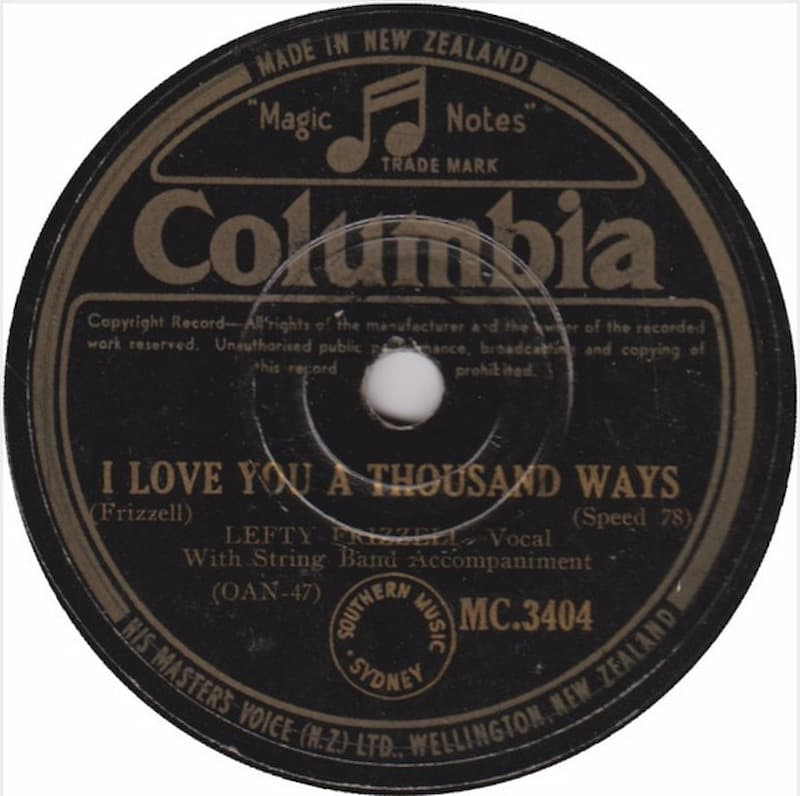
When Lefty Frizzell stepped into Jim Beck’s recording studio in Dallas in July 1950, he was still largely unknown outside Texas dance halls. On September 4 that year, Columbia Records released his debut single, a double-sided 78 RPM record. The A-side, “If You’ve Got the Money (I’ve Got the Time),” was an up-tempo honky-tonk number. The B-side carried a quieter, more intimate tone: the ballad “I Love You a Thousand Ways.” Both songs reached number one on the Billboard country charts, an extraordinary feat for a brand-new artist and the start of a meteoric rise.
The ballad had deeply personal roots that reached back three years. In July 1947, at age nineteen and recently married to Alice Harper, Frizzell was arrested in Roswell, New Mexico, and convicted of statutory rape after an encounter with an underage fan. While serving six months in the Chaves County jail, he spent long hours reflecting on the pain he had caused his wife. Filled with guilt, he wrote poems and letters to Alice from his cell. One of those writings eventually became the lyrics of “I Love You a Thousand Ways,” a sincere promise of devotion despite past mistakes.
Alice, who had been devastated by the arrest, forgave her husband after his release. The couple remained married until Frizzell’s death in 1975, and they are buried side by side near Nashville. The song stands as a public testament to that reconciliation, turning private remorse into one of country music’s most touching expressions of love and redemption.
Recorded during Frizzell’s first professional session with producer Don Law, the track showcased the smooth, slightly slurred vocal style and emotional phrasing that would define his career. Without instruments in jail years earlier, he had composed the words purely from feeling. In the studio he brought them to life with raw sincerity, letting his voice glide and catch in ways that made the performance feel like a private conversation.
The success of “I Love You a Thousand Ways” was swift. It entered the Billboard country chart in November 1950 and spent thirty-two weeks on the list, holding the number-one spot for three weeks alongside its A-side counterpart. Within two years Frizzell had scored thirteen top-ten country hits and at one point placed four songs simultaneously in the Billboard top ten—an achievement no one had matched before. The single launched him from local nightclub performer to one of the leading voices in honky-tonk music.
Over the decades the song has been recorded by many artists, including John Anderson, whose 1981 version returned it to the charts. It remains a staple in classic country playlists and was even chosen by Merle Haggard to open his own funeral service. A book and album about Frizzell’s life later took their titles from the song, underscoring its central place in his story.
More than seventy-five years after its release, “I Love You a Thousand Ways” continues to illustrate how Lefty Frizzell turned the lowest point of his young life into enduring art. What began as a private plea from behind bars became one of the most honest and lasting love songs in country music history, reminding listeners of the power of vulnerability and second chances.
Video
Lyric
I love you, I’ll prove it in days to come
I swear it’s true, darling you’re the only one
I think of you, of the past and all our fun
I love you, I’ll prove it in days to come
You’re my darling, you’ve been true
I should have been good to you
You’re the one that’s in my heart while we’re apart
I’ll be true, I’ll prove it to you someday
I love you, in my heart you’ll always stay
I’ve been so blue and lonesome all these days
I love you, I’ll prove it a thousand ways
I’ll be nice and sweet to you
And no more will you be blue
I’ll prove I love you every day, all kinds of ways
So darling please wait, please wait until I’m free
There’ll be a change, a great change made in me
I’ll be true, there’ll never be blue days
I love you, I’ll prove it a thousand ways