About The Song
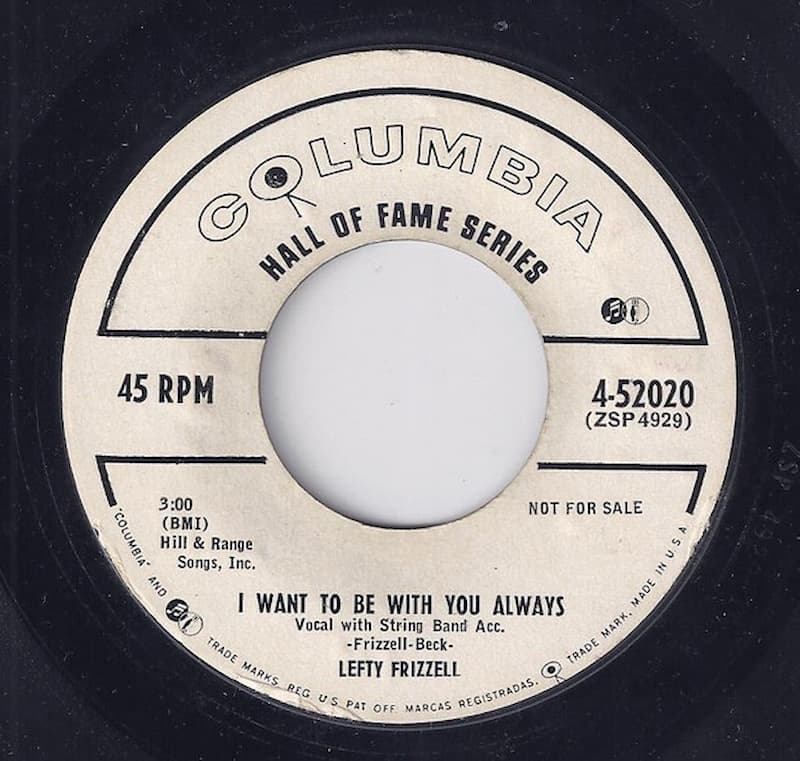
In January 1951 Lefty Frizzell returned to Jim Beck’s studio in Dallas, Texas, for another productive recording session. On January 11 he laid down “I Want to Be with You Always,” a tender ballad he had co-written with Beck, the same studio owner who had helped launch his career with the previous year’s hit “If You’ve Got the Money (I’ve Got the Time).” Released by Columbia Records on March 19, 1951, with “My Baby’s Just Like Money” on the B-side, the song quickly became Frizzell’s third number-one country hit and extended his astonishing early run of success.
The track emerged from the close working relationship between Frizzell and Beck at a time when the young singer was spending long hours in the studio. Their collaboration produced a straightforward declaration of devotion, one that expressed a simple yet profound wish to stay beside a loved one through every moment of life. The lyrics avoided elaborate storytelling and instead focused on quiet sincerity, a quality that resonated deeply with audiences still recovering from the uncertainties of the postwar years.
Frizzell delivered the performance with the smooth, slightly slurred vocal style and gentle note-bending slides that had already become his trademark. The arrangement remained understated, letting his voice and the steel guitar carry the emotional weight while keeping the focus on the intimate promise at the song’s heart. At just over three minutes, the recording felt like a private conversation rather than a commercial release, giving it an enduring warmth.
The single climbed the Billboard country charts rapidly. It reached number one in June 1951 and spent eleven weeks atop the Disc Jockey chart, while also holding the top spot for six weeks on the Best Sellers list and remaining on the charts for a total of twenty-seven weeks. By mid-1951 Frizzell had achieved the rare feat of placing four songs simultaneously in the Billboard country top ten, a dominance matched by few artists of the era and one that placed him alongside Hank Williams as a defining voice in honky-tonk music.
The ballad later appeared on his 1952 album *Listen to Lefty*, a collection that gathered many of the hits that had transformed him from a Texas dance-hall singer into a national star. While many of his early releases leaned toward upbeat numbers or clever narratives, “I Want to Be with You Always” stood out as a pure expression of love and commitment, broadening his appeal beyond the jukebox crowd.
Decades later Merle Haggard, who counted Frizzell among his greatest influences, recorded his own version for the 2001 album *Roots, Volume 1*. Other artists have also kept the song alive in live sets and compilations. Its message of steadfast affection has proven as timeless as Frizzell’s vocal delivery itself.
More than seventy years after its release, “I Want to Be with You Always” remains a clear example of why Lefty Frizzell’s early work left such a lasting mark on country music. What began as another Dallas studio session in the winter of 1951 became one more enduring testament to an artist who could turn simple feelings into art that still speaks directly to listeners today.
Video
Lyric
I lose my blues
Honey when I’m with you
No one else can do
You’re in my heart to stay
But when I’m gone
And I’m all alone
I’ll be singing this song
I wanna be with you always
I’d be happy dear
If you could only be here
And always be near
Forever and a day
Then we’d travel far
To some big shining star
Just you and my guitar
And stay there sweetheart for always
I hope you feel the same
You really want my name
Well you’ll be the one who’s to blame
If it works out wrong that day
‘Cause my love is true
My love is only for you
I’ll never be blue
If I can be with you always