About The Song
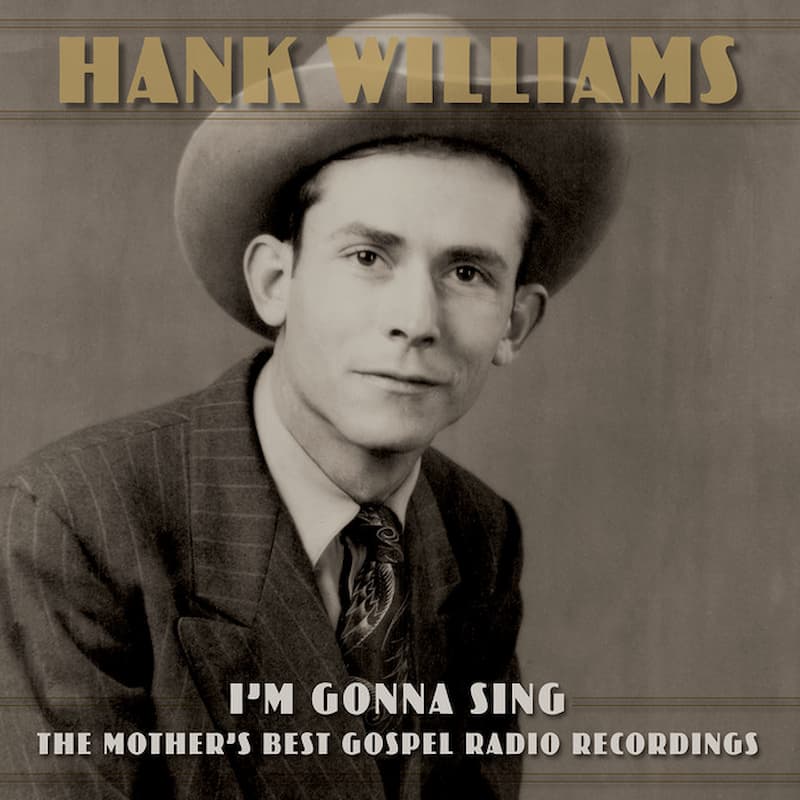
“I’m Gonna Sing” is best understood as part of Hank Williams Sr.’s gospel-facing repertoire culture rather than the small cluster of songs that define his secular chart legend. The title itself reflects a common devotional formula in Southern sacred music: testimony through direct declaration, repeated in simple language so congregations and radio audiences can follow immediately. In historical terms, songs with this structure often circulated through church singing, local broadcasts, and informal performance before they were stabilized in later discographies. That is why writing about this title requires careful distinction between repertoire association and fully documented commercial-release metadata.
In Hank’s era, this distinction mattered a lot. Late-1940s and early-1950s country music was still primarily a single-and-radio economy, and sacred material often moved through parallel channels—live shows, sponsored programs, and faith-oriented segments—rather than a clean album campaign in the modern sense. So if readers ask for a definitive first LP placement, the accurate framework is usually broader: performance circulation first, then post-period compilation packaging. Hank’s catalog, especially on the gospel side, is full of titles remembered strongly by audiences even when session-level documentation is less universally standardized than his major MGM hit singles.
Thematically, “I’m Gonna Sing” fits a long lineage of commitment songs in American gospel tradition. The message is not narrative-heavy; it is declarative and functional: singing becomes evidence of faith, endurance, and communal belonging. That utility is exactly why such songs survived. They work in congregational settings, quartet harmonies, and solo country-gospel adaptations without losing meaning. For an artist like Hank Williams Sr., whose vocal method emphasized clarity and emotional directness, this kind of material was ideal. His delivery style could carry conviction without ornamental complexity, which made sacred texts sound conversational rather than ceremonial.
A useful side story for deeper writing is how songs like this blurred the line between ministry language and commercial media. In many Southern communities, audiences did not treat secular country and gospel as separate cultural universes; they consumed both across the same week, often from the same performer. Hank operated directly inside that expectation. So a title like “I’m Gonna Sing” is historically valuable because it documents his role not only as a hitmaker but also as a transmitter of shared religious vocabulary into broader country listening spaces. That dual role helps explain why his legacy extends beyond chart arithmetic.
Regarding Billboard context, responsible reporting should avoid assigning a specific chart peak to this exact title unless you can confirm the precise artist-version entry in archival records. Hank Williams Sr.’s chart status is unquestionably foundational, but many gospel-associated titles in his orbit are better described through influence, circulation, and repertoire continuity than through definitive peak positions. If your blog requires strict chart data, verify week-by-week entries in Billboard archives and session references before printing numbers. This approach protects factual accuracy and avoids the common mistake of transferring chart claims from similarly titled or differently attributed recordings.
For a strong closing angle, frame “I’m Gonna Sing” as a documentation lesson in classic-country research: separate source tradition, performer association, and verified release evidence. When applied to Hank Williams Sr., that method produces a richer and more trustworthy story than simple legend recaps. It shows how a seemingly simple gospel title can reveal the full machinery of the era—community transmission, radio-era circulation, posthumous catalog organization, and enduring performer identity. In short, the song’s significance lies less in blockbuster metrics and more in how it captures Hank’s function as both artist and cultural conduit.
Video
Lyric
When I get to Glory, I’m gonna sing, sing, sing
I’m gonna let the hallelujahs ring
I’m gonna praise my blessed Saviour’s name
When I get to Glory, I’m Gonna sing, sing, sing
In this world of sorrow, I’ve seen trouble and woe
When I get to Glory I’ll see no more
For ] I know my prayers have not been in vain
When I get to Glory, I’m gonna sing, sing, sing
Sometimes I get so weary inside
Then I recall how my Jesus died
Up there I know, there’ll be no pain
When I get to Glory, I’m gonna sing, sing, sing.
When I get to Glory, I’m gonna sing, sing, sing
I’m gonna let the hallelujahs ring
I’m gonna praise my blessed Saviour’s name
When I get to Glory, I’m Gonna sing, sing, sing
Up there no tears will blind my eyes
And I’ll walk along by my Jesus’ side
I’ll meet my loved ones all once again
When I get to Glory, I’m Gonna sing, sing, sing.
When I get to Glory, I’m gonna sing, sing, sing
I’m gonna let the hallelujahs ring
I’m gonna praise my blessed Saviour’s name
When I get to Glory, I’m Gonna sing, sing, sin