About The Song
“I Dreamed That the Great Judgement Morning” is a well-known gospel hymn that predates Hank Williams and is most often credited to H. E. “Hank” (or “H.E.”) Spence in early-20th-century gospel publishing references. It belongs to the warning-and-testimony branch of revival-era songwriting, built around a vivid dream narrative meant to make doctrinal ideas feel immediate. That origin matters for accuracy: if you are writing about the title in a Hank Williams context, Hank should be presented as an interpreter within an older sacred tradition, not the original author of the composition.
The song’s structure is designed for clarity. It begins with a dream of the Judgment Day, then moves through scenes of accountability, separation, and regret. This kind of “vision” format was common in gospel standards because it compressed a full moral arc into a short, memorable sequence that listeners could retell. The lyric avoids complex theology and instead uses direct images—names called, choices revealed, consequences faced. That made it highly transferable across settings: congregations, quartets, radio gospel hours, and later country-gospel recordings could all deliver it without rewriting its core function.
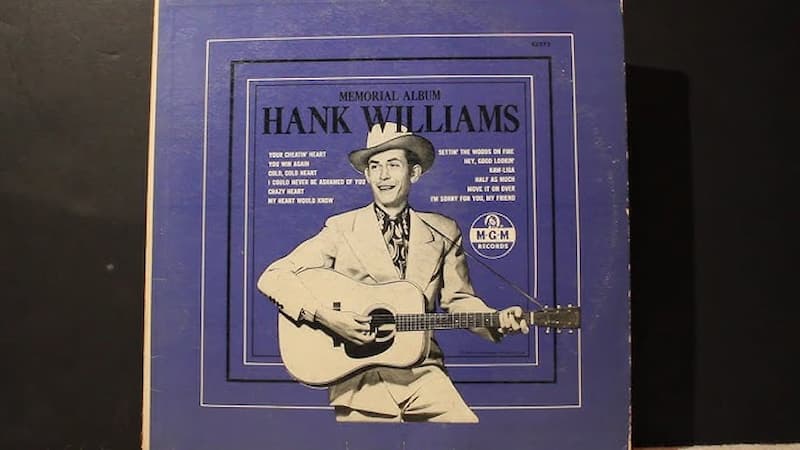
In Hank Williams’s career world, sacred repertoire like this fit naturally alongside his secular singles. Mid-century Southern audiences did not require a strict genre split between Saturday-night country and Sunday gospel; performers were often expected to handle both. Hank’s delivery style—plain diction, controlled emotion, and a conversational sense of timing—worked especially well for warning hymns, which rely on credibility rather than ornament. So even when a hymn is not “his” by authorship, it can still be associated with his legacy because his voice matched the material’s intended tone.
Release history is where careful wording is most important. Many Hank-era gospel titles are encountered today through later compilation programs rather than a single, definitive original LP campaign. In the late 1940s and early 1950s, recordings traveled through singles, radio performances, and touring exposure first, then were reorganized into albums and boxed sets long afterward. So if your blog requires a strict “release date” and “album,” the most responsible method is to cite a verified Hank Williams sessionography or labelography that documents the specific master recording and its first commercial issue, rather than relying on secondary lists that may mix masters, alternates, and later reissue naming.
On Billboard context, it is generally safer not to claim a specific chart peak for this hymn under Hank Williams’s name unless you can confirm an artist-version entry in Billboard’s historical archives. Hank’s biggest chart legacy is tied to other well-documented secular hits; gospel standards often carried influence through circulation and tradition rather than through clear chart outcomes. A factual article can still be “deep” by emphasizing what is demonstrable: the hymn’s authorship tradition, the revival-era narrative device, and Hank’s role as a mid-century country voice that helped keep inherited sacred repertoire audible in mass media.
For a strong closing angle, treat “I Dreamed That the Great Judgement Morning” as a case study in how American gospel material moves across systems: written for evangelistic use, sustained by community singing and quartet performance, then periodically re-amplified by major commercial artists. That framework also explains why attribution confusion persists in fan culture. The composer credit belongs to earlier gospel publishing history, while Hank Williams’s importance lies in interpretation—delivering the warning narrative in plain speech, at a time when country radio could still carry sacred material as part of everyday listening.
Video
Lyric
It’s one of the first songs I think I ever learned
My grandmother taught me this song
Called “The great judgement morning”
I dreamed that the great judgement morning
Had dawned and the trumpet had blown
I dreamed that the nations had gathered
To judgement before the white throne
From the throne came a bright shining angel
And stood on the land and the sea
And swore with her hand raised to heaven
That time was no longer to be
And oh, what weeping and wailing
As the lost were told of their fate
They cried for the rocks and the mountains
They prayed, but their prayers were too late
The rich man was there, but his money
Had melted and vanished away
A pauper stood there in the judgment
His debts were too many to pay
The great man was there, but his greatness
When death came, was left far behind
The angel that opened the records
No trace of his greatness could find
The widow stood there and the orphans
God heard and remembered their cries
No sorrow in heaven forever
God wiped all the tears from their eyes
The gambler was there, and the drunkard
And they who had sold them the drink
With people who gave them the license
Together in hell they did sink
And oh, what weeping and wailing
As the lost were told of their fate
They cried for the rocks and the mountains
They prayed, but their prayers were too late
The mortal man to the judgment
But self-righteousness would not do
All the men who had crucified Jesus
Had passed off as mortal men, too
And the souls that had put off salvation
“Not tonight, I’ll get saved by and by
No time now to think of religion”
But at last they’d found time to die
And oh, what weeping and wailing
As the lost were told of their fate
They cried for the rocks and the mountains
And they prayed, but their prayers were too late