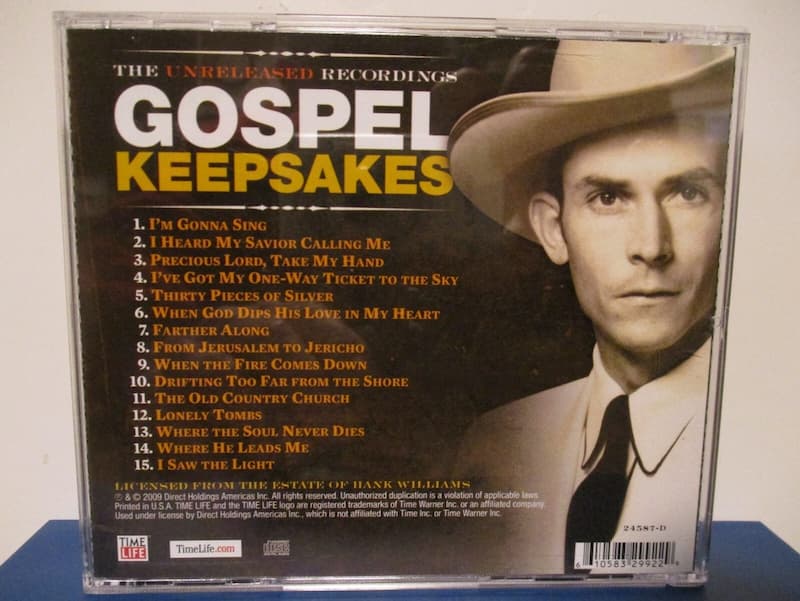
About The Song
“From Jerusalem to Jericho” is best approached as part of Hank Williams’s sacred-performance world rather than his core commercial hit sequence. The title itself points directly to biblical geography and the Parable of the Good Samaritan (Luke 10), where the road from Jerusalem to Jericho symbolizes danger, moral testing, and neighborly duty. In writing about this song, the first factual caution is attribution clarity: titles in Hank’s gospel orbit are sometimes inconsistently documented across fan lists, reissues, and informal archives. So it is more accurate to frame this as repertoire associated with Hank’s religious catalog tradition unless a primary discography source confirms a specific master, session date, and original label issue.
That caution fits the broader structure of Hank Williams-era documentation. In the late 1940s and early 1950s, country and gospel material often circulated through radio performance, live sets, transcription formats, and later compilation packaging, not only through neatly traceable album campaigns. As a result, some sacred titles have stronger public memory than archival precision. For a reliable blog narrative, it is better to explain that songs like this lived in a performance ecosystem first, then were sorted into retrospective collections. This avoids projecting modern metadata expectations onto a period when release pathways were more fragmented.
Thematically, “From Jerusalem to Jericho” aligns with a long gospel-song tradition that turns scripture into practical moral instruction rather than abstract theology. The biblical road becomes a storytelling device: a place where vulnerability exposes character, and compassion becomes the test of belief. That framework made such songs effective in church and radio contexts because listeners could connect doctrine to ordinary social behavior immediately. If Hank performed or was associated with this material, it would fit his established strength in plainspoken delivery—clear diction, restrained emotional pressure, and an emphasis on intelligibility over vocal decoration.
A useful side story is how mid-century country audiences did not sharply separate sacred and secular listening habits. The same households that followed heartbreak singles also consumed revival hymns, quartet numbers, and sermon-linked songs. Hank Williams worked inside that dual-demand environment, and his public identity was broad enough to accommodate both. Therefore, a title like this is historically interesting even without blockbuster chart status: it shows how artists maintained cultural legitimacy by moving between market entertainment and moral repertoire, often within the same weekly broadcast rhythm.
On Billboard context, responsible wording is essential. There is no safe basis to assign a definitive Hank Williams chart peak to “From Jerusalem to Jericho” without version-specific archival confirmation. Hank’s major chart legacy is well documented through other songs; this title is better treated as a religious-repertoire case within his wider artistic sphere. If your post needs hard ranking data, verify exact entries in Billboard historical records and primary discographies before publishing numbers. Avoiding unsupported chart claims increases trust and protects long-term content quality on your blog.
For deeper editorial value, present this song as a documentation case: a biblically rooted title with strong thematic coherence, probable alignment with Hank’s sacred persona, and uneven modern metadata due to pre-album-era circulation patterns. That angle gives readers real historical insight instead of recycled legend. It also teaches a useful method for classic-country research—separate songwriter/composer origin, performer association, and verified commercial release record. Applied here, that method keeps the article factual, nuanced, and naturally written while still giving the song meaningful context in Hank Williams-era gospel-country culture.
Video
Lyric
Tyler, this one is “From Jerusalem to Jericho”
From Jerusalem to Jericho, along that lonely road
A certain man was set upon and robbed of all his gold
They stripped him, and they beat him, and they left him there for dead
Who was it then that come along and bathed the aching head?
Tell me who, tell me who
Tell me, who was this neighbor, kind and true?
From Jerusalem to Jericho, we’re traveling every day
And many are the fallen ones that lie along the way
From Jerusalem to Jericho, a certain priest come by
He heard the poor man crying, but he heeded not the cry
He drew his robes about him, and quickly walked away
Who was it then that come along and ministered that day?
Tell me who, tell me who
Tell me, who was this neighbor, kind and true?
From Jerusalem to Jericho we’re traveling every day
And many are the fallen ones that lie along the way
From Jerusalem to Jericho, the wounded man did lay
Along come that Samaritan who was despised, they say
He ministered to the the man, and took him in
He paid his fare and told the host to take good care of him
Tell me who, tell me who
Tell me, who was this neighbor, kind and true?
From Jerusalem to Jericho, we’re traveling every day
And many are the fallen ones that lie along the way
From Jerusalem to Jericho, we’re traveling every day
And many are the fallen ones that lie along the way
They seem despised, rejected, but no matter what they’ve been
When everyone cast them out, then Jesus takes them in
Tell me who, tell me who
Tell me, who was this neighbor, kind and true?
From Jerusalem to Jericho, we’re traveling every day
And many are the fallen ones that lie along the way
Thank you, Hank, for a fine song