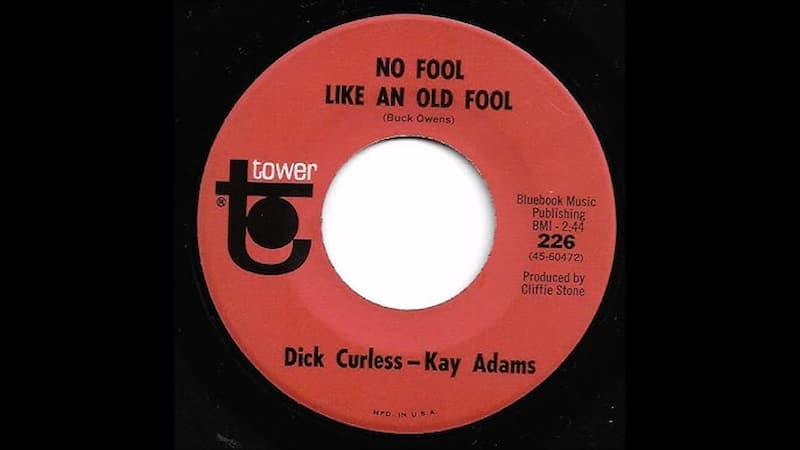
About The Song
“No Fool Like an Old Fool” has the kind of title that makes you nod before the first note plays: a small, wry truth dressed up as a cautionary tale. Buck Owens treated songs like that as conversational currency—lines you could drop into a set and watch people recognize their own lives in the space between the words. The record sits in his catalog as one of those moments where he seemed less like a star and more like a neighbor who’d seen the same mistakes and was willing to name them without sermonizing.
One of the things many people forget about Buck is how much he learned from watching other people. He didn’t collect storylines from press clippings; he picked them up in bars, at bus stops and after shows. Crew members often said he stayed late to listen, not to gossip but to understand the way people framed their regrets. That habit of listening shows in songs like this: instead of pushing a moral, it reports a fact of life, the weary recognition that age doesn’t always bring wisdom—sometimes it just brings repetition.
Those who worked with Buck liked to talk about how small studio decisions reinforced that feel. Don Rich, whose harmonies were as much a signature as Buck’s voice, knew how to answer a line with a single note that felt like agreement rather than commentary. Engineers learned not to erase the little human things—the sigh before a phrase, the crooked timing—because those imperfections made a performance sound like an honest admission. The result is a recording that resembles a private conversation more than a public declaration.
There are backstage stories that go with the song. Band members remembered nights when older fans would come up after a show and tell similar stories—how they kept falling for the same mistakes, how youthful promises kept resurfacing in new forms. Buck treated those confessions as material rather than pity; he turned them into a short, clear song that felt less like judgment and more like a mirror. That’s part of why audiences responded: they heard themselves, not a lesson preached at them.
The song also sits comfortably in the live set because it gives the room a place to breathe. After a string of fast numbers, Buck could slow things down and make listeners listen. People who attended his shows remembered those moments as shifts in temperature: the laughter quieted, and the conversation in the room turned inward. A line like “No fool like an old fool” doesn’t demand a chorus of hands; it asks for recognition, and the room often obliged.
Over time the track has become one of those deep cuts people trade among themselves—“You’ve got to hear that Buck tune about old mistakes”—and it endures because it trusts the listener. It doesn’t moralize; it simply names a persistent human pattern and leaves you to decide what to do with that knowledge. That restraint—plain, unsentimental, and oddly generous—is where the song’s quiet power lives.
Video
Lyric
The first time you hurt me
I thought I’d die
The second time it happened
I cried all night
They say a heart can stand
Just so much grief and pain
But a fool in love keeps loving
They never change
There’s no fool like an old fool
That’s loved and lost at least a hundred times
There’s no fool like an old fool
That keeps on falling for the same old line
You call and say you’re sorry
That you let me down
I take you back
‘Cause you’re what makes my world go round
And though I know my chances
Are so very small
I’d rather have a part of you
Than none at all
There’s no fool like an old fool
That’s loved and lost at least a hundred times
There’s no fool like an old fool
That keeps on falling for the same old line