About The Song
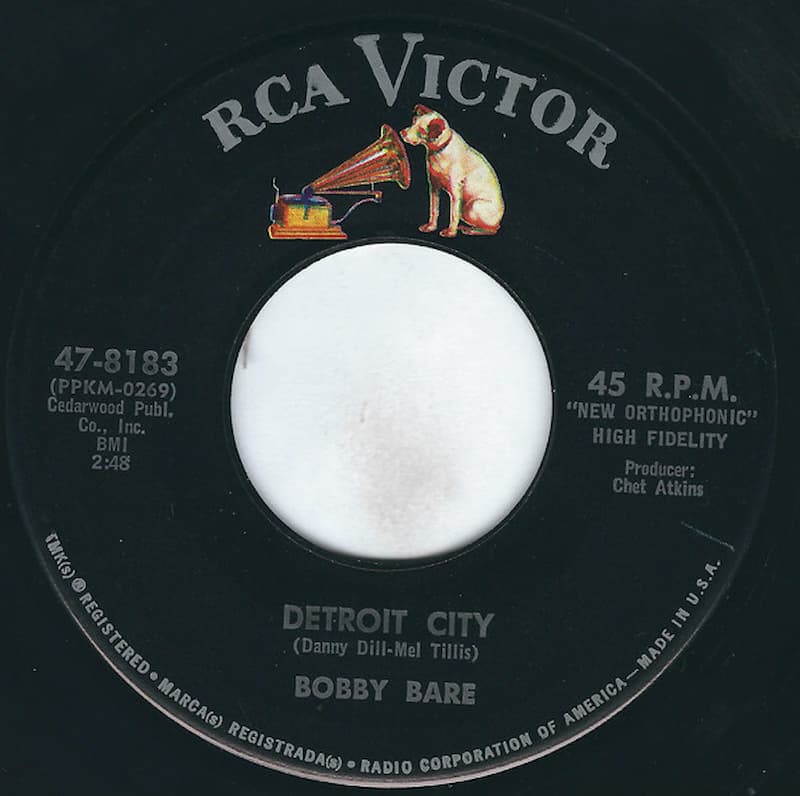
In mid-April 1963 Bobby Bare entered RCA Victor Studio B in Nashville for a session produced by Chet Atkins. On April 18 he recorded “Detroit City,” a two-minute-and-forty-seven-second narrative ballad written by Danny Dill and Mel Tillis. RCA Victor released the single in May 1963 under catalog 47-8443, with “Heart of Ice” on the B-side. The track later served as the title song and centerpiece of Bare’s debut album *“Detroit City” and Other Hits by Bobby Bare*, issued in August 1963. At the time the twenty-eight-year-old Ohio native was transitioning from songwriter and minor pop artist to a major country voice, and the session marked the beginning of his long, successful association with RCA Victor.
Dill and Tillis had originally titled the piece “I Wanna Go Home.” Billy Grammer recorded the first version in 1962, but it received little attention. Bare heard the demo and immediately connected with the story. Working with Atkins, he reshaped the song into a polished countrypolitan arrangement that retained its folk roots while giving it mainstream appeal. The writers drew on the real experiences of Southern migrants who left family farms for factory jobs in Northern industrial cities during the postwar years, turning a personal longing into a broader commentary on displacement and homesickness.
The song unfolds as the first-person confession of a man who left the South for work in Detroit’s auto plants. He describes the long shifts, the crowded boarding houses, and the constant roar of the assembly line. Each verse builds a picture of quiet desperation: he earns good money but misses the simple life back home, the cotton fields, and the people who knew him before the big city. The repeated chorus—“I wanna go home”—carries both literal and emotional weight, delivered with Bare’s relaxed, almost spoken drawl that made the tale feel like a late-night conversation rather than a performance.
Bare’s vocal style on the record blended the conversational honesty he had developed in Texas dance halls with the smoother production values of early-1960s Nashville. Atkins kept the arrangement clean and supportive, using acoustic guitar, light strings, and subtle background vocals from the Anita Kerr Singers to frame the story without overwhelming it. The result sounded intimate yet radio-ready, bridging the folk revival and mainstream country at a moment when both scenes were influencing each other.
Released in the spring of 1963, the single climbed steadily. It reached number six on the Billboard Hot Country Singles chart, spent eighteen weeks on the national survey, and crossed over to peak at number sixteen on the Billboard Hot 100 and number four on the Adult Contemporary chart. In 1964 the recording earned Bare a Grammy Award for Best Country & Western Recording, the first major accolade of his career. The success launched him as a consistent chart presence and helped establish the narrative song as a cornerstone of his catalog.
Over the decades “Detroit City” has been recorded by artists including Tom Jones, whose 1967 version reached the pop charts in the UK, and has remained a staple of Bare’s live shows. The track later appeared on numerous compilations and reissues that trace his RCA years. It captured a specific moment in American life—the migration of Southern workers to Northern factories—and turned that experience into a lasting country standard.
More than sixty years after that April afternoon in Nashville, “Detroit City” stands as one of Bobby Bare’s signature recordings. What began as a modest demo became the breakthrough hit that introduced his distinctive storytelling style to a national audience and earned him his first Grammy. The song remains a favorite among fans who value honest, understated portraits of everyday longing in classic country music.
Video
Lyric
Last night I went to sleep in Detroit City
I dreamed about them cotton fields of home
I dreamed about my mother, dear old pappy, sister and brother
And I dreamed about the girl who’s been waitin’ for so long
I want to go home
I want to go home
Oh, how I want to go home
Home folks think I’m big in Detroit City
From the letters that I write they think I’m just fine, yes they do
But by day I make the cars and by night I make the bars
If only they could read between the lines
‘Cause you know I rode a freight train north to Detroit City
And after all these years I find I’ve just been wastin’ my time
You know what I’m gonna do?
I’m gonna take my foolish pride
Get it on a southbound freight and let it ride
I’m gonna go back to the loved ones
The ones I left waiting so far behind]
I want to go home, yeah
I want to go home
Oh, how I want to go home [Can’t you hear me?]
I want to go home
Whoa, baby I want to go home
Oh, how I want to go home [Somebody help me]
I want to go home, yeah
I want to go home, whoa oh
Oh, how I want to go home
Hmm, I want to go home