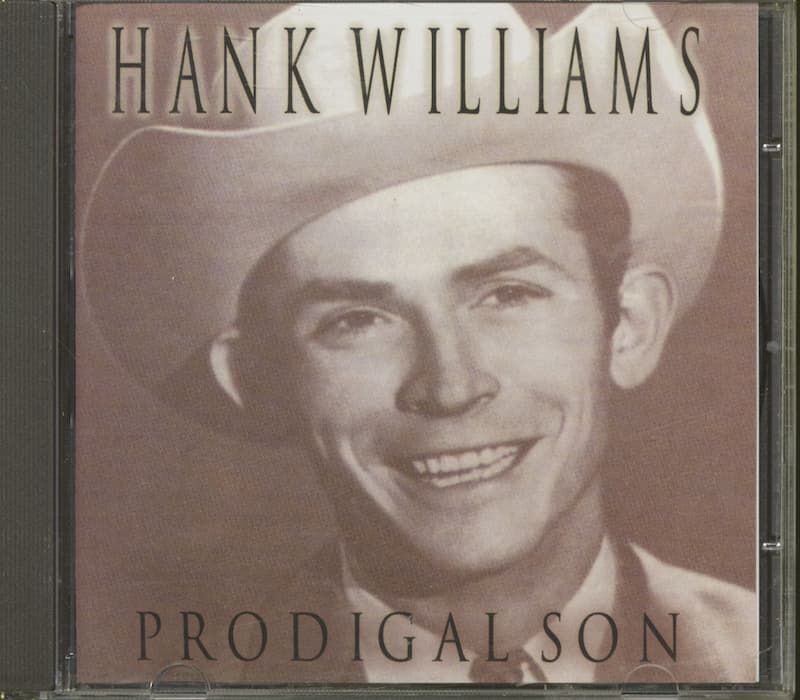
About The Song
“The Prodigal Son” in a Hank Williams context should be framed first through source tradition: the title comes from the biblical parable in Luke 15, one of the most adapted narrative templates in American gospel music. That means the core story existed long before any Hank-era recording and circulated widely through hymnbooks, revival meetings, quartet repertoires, and regional radio. For accurate writing, it is important not to assume single-author ownership unless a specific copyrighted composition and recording session are clearly documented. With classic gospel-country catalogs, identical or near-identical titles often represent different versions across decades.
In Hank Williams’s artistic profile, a song built on the Prodigal Son theme fits naturally with his sacred repertoire identity. Hank’s audience in the late 1940s and early 1950s did not consume secular and religious material in separate cultural boxes; they expected both. That is why gospel-adjacent titles associated with Hank can feel deeply embedded in his legacy even when documentation is less standardized than his biggest MGM secular singles. Historically, many such tracks moved through live performance and radio circulation first, then appeared later in compilation ecosystems that sometimes blurred the line between confirmed masters, alternates, and repertoire associations.
The narrative framework of the Prodigal Son is structurally strong for song adaptation: departure, collapse, return, and forgiveness. It gives writers and performers a complete emotional arc with minimal exposition, which is ideal for short-form country-gospel formats. In practical songwriting terms, the theme works because it combines personal failure with social reconciliation and spiritual restoration. Hank’s vocal style—plain diction, restrained ornament, and conversational timing—would be highly compatible with that arc, since the material depends more on credibility and clarity than on technical vocal display.
A useful side angle for your blog is how “Prodigal Son” songs functioned as moral storytelling tools in community life, not just entertainment products. In church-centered listening environments, these songs reinforced behavioral norms around family, responsibility, repentance, and re-acceptance. When artists like Hank engaged that material, they were participating in a broader communication system that linked scripture, local culture, and commercial media. This is one reason such songs retained value even without blockbuster chart outcomes: they carried social meaning beyond record sales and remained reusable across generations.
For release-date, album, and chart claims, the safest editorial practice is evidence-tier wording. If you cannot tie this exact title to a verified Hank session log, matrix number, original label issue, and Billboard entry, avoid stating precise commercial metrics as fact. Hank Williams’s chart legacy is unquestionably major, but it is anchored by clearly documented titles outside many disputed or loosely cataloged gospel attributions. A high-trust article should therefore distinguish between “thematically associated with Hank’s gospel repertoire” and “confirmed as a specific charting Hank single.” That distinction strengthens credibility and prevents common legacy-catalog errors.
If you want depth with factual discipline, present “The Prodigal Son” as a case study in classic-country archival method: start from biblical source, map gospel transmission channels, then separate performer association from verified commercial documentation. Applied to Hank Williams, this approach yields a more useful story than myth-based summaries. It shows how older sacred narratives survived by constant reinterpretation, and how Hank’s importance includes not only writing original hits but also helping preserve inherited religious storytelling in mainstream country memory.
Video
Lyric
A Prodigal son once strayed from his father
To travel a land of hunger and pain
And now I can see the end of my journey
I’m going to heaven a gain
I leave you the day, to help all your neighbors
I leave you the night, to solemnly pray
So try to repent and ask for forgiveness
We’ll meet up in heaven, someday
Goodbye to this world, with all its sorrows
Goodbye to the fields, that I used to roam
I’m going away where, life is eternal
My Shepherd is calling me home
From out of the sky, He’s coming to meet me
To wash all my sins and call me His own
His servants will bring, a ring for my finger
And never no more will I roam